

Labour
Welders are hard to hire and cost more every year
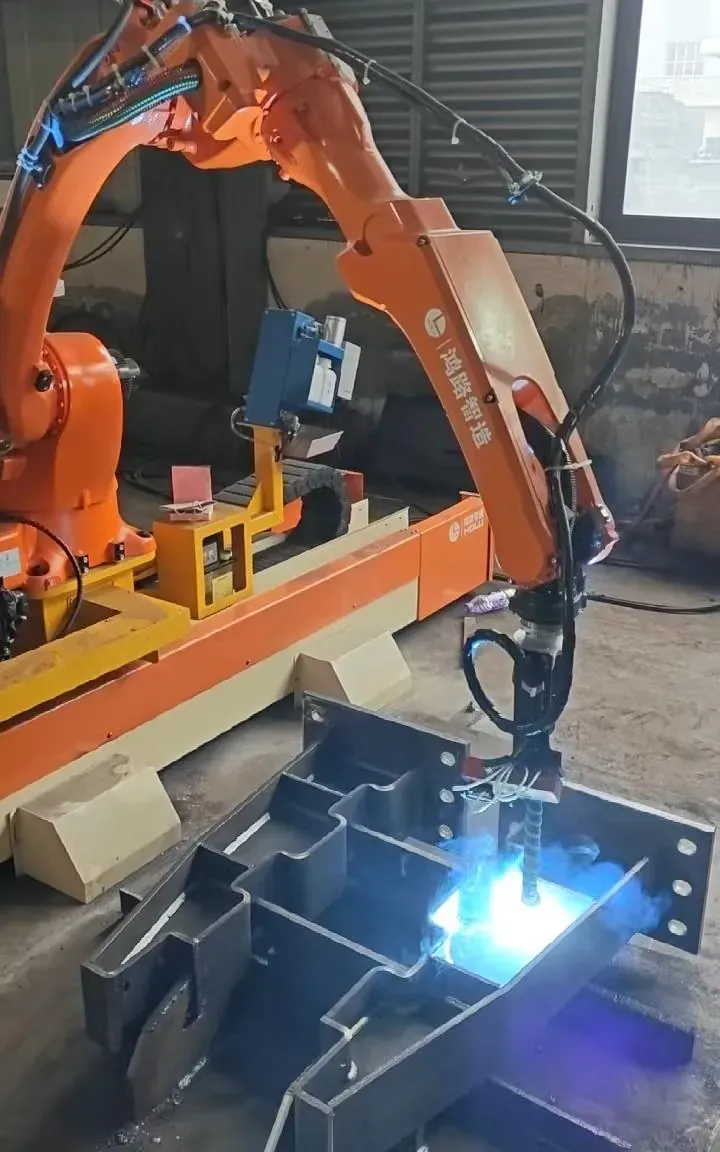
One operator runs 3–6 stations, and each robot welds 70–120 m per day shift.
Labour
One operator runs 3–6 stations, and each robot welds 70–120 m per day shift.
Programming
Import a STEP or IFC model — the software finds the welds, plans the path and checks for collisions.
Quality
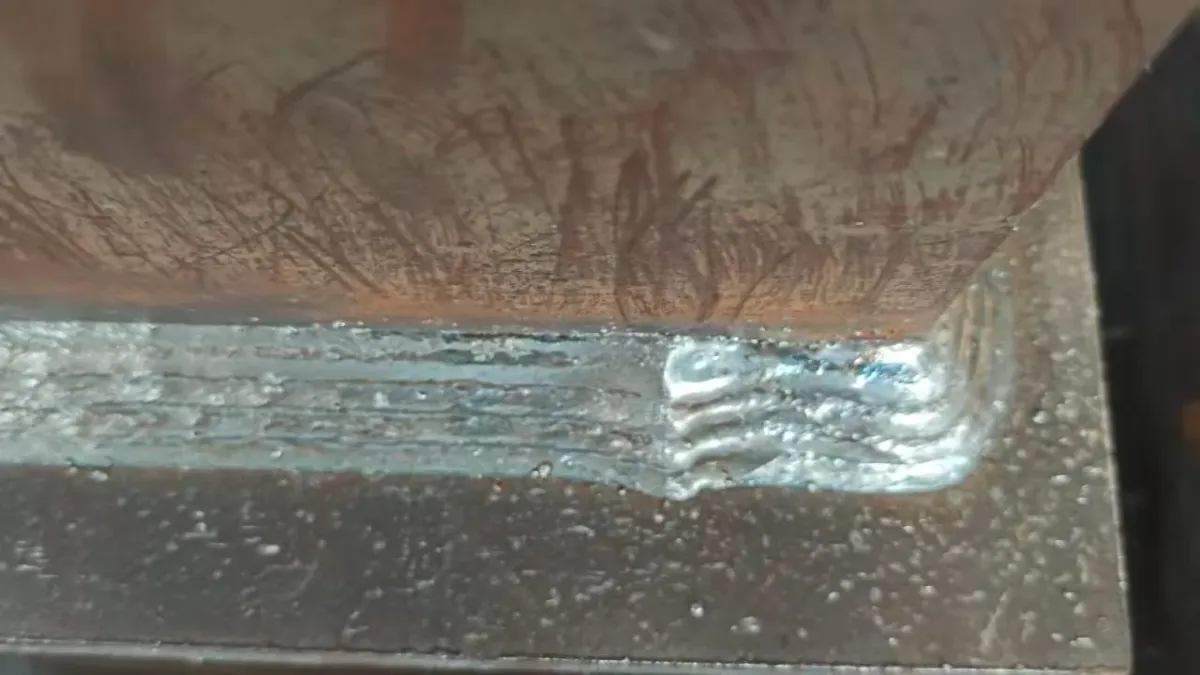
Programmed welding, seam scanning before each weld and a built-in structural steel process library.
Load a STEP or IFC model, for example exported from Tekla Structures. Flat web plates with stiffeners can also be scanned and modelled at the station.
The software extracts the welds, takes parameters from the process library and checks the robot path for collisions.
Each seam is located by scanning before welding, and the welded length is recorded after each part.
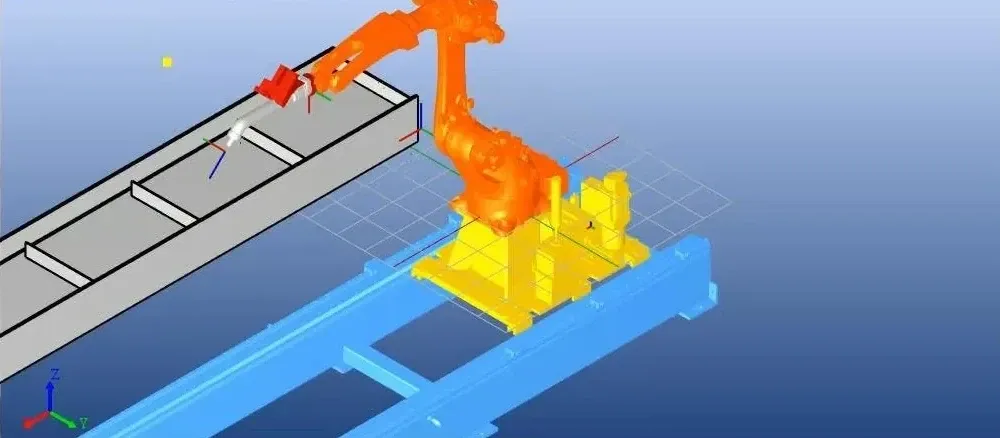
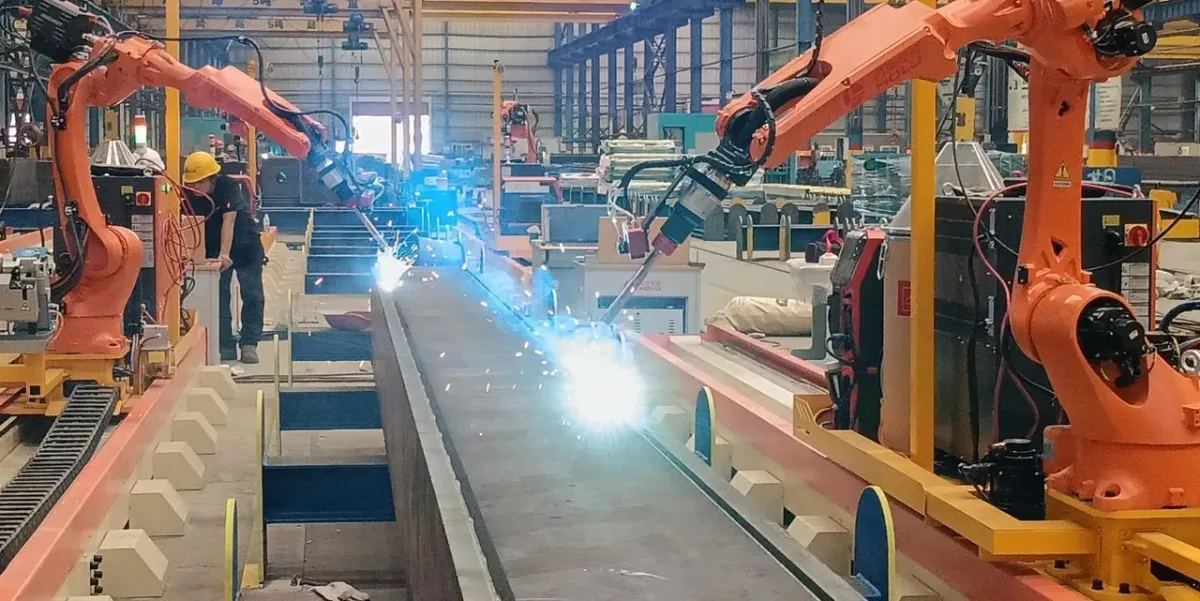
For H-section columns, beams and crane runway beams.
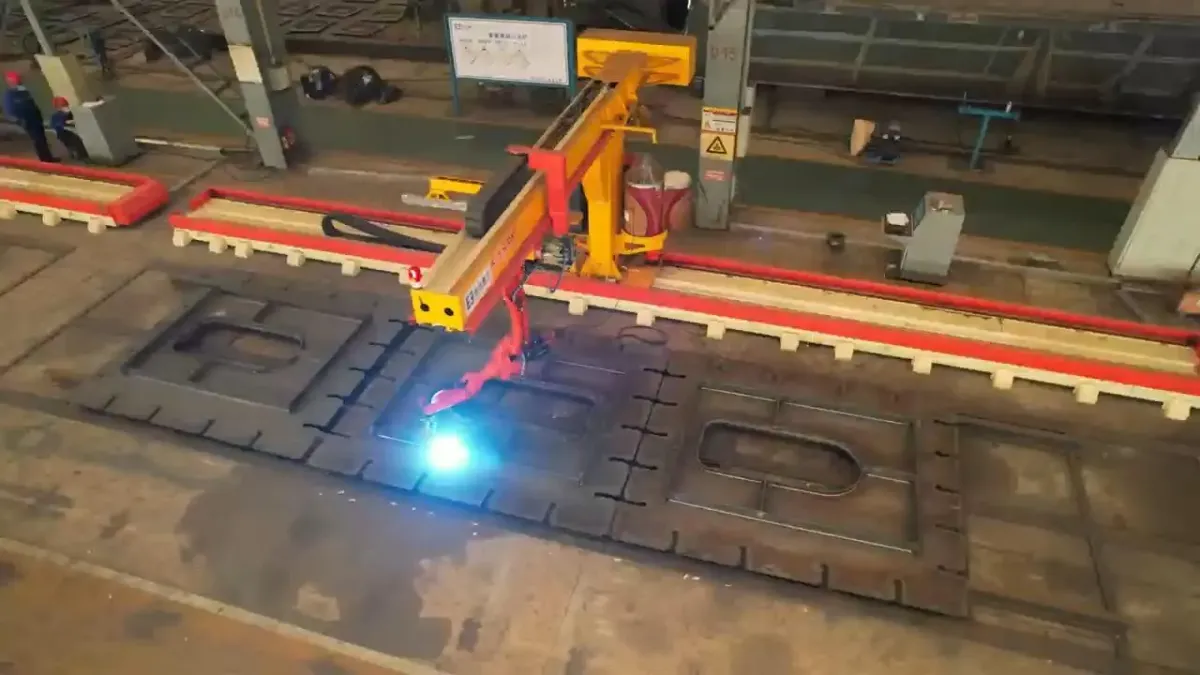
For bridge steel and wide plate assemblies.
These two robots cover most steel structure welding. We also build submerged arc, 9-axis, gantry and custom stations.
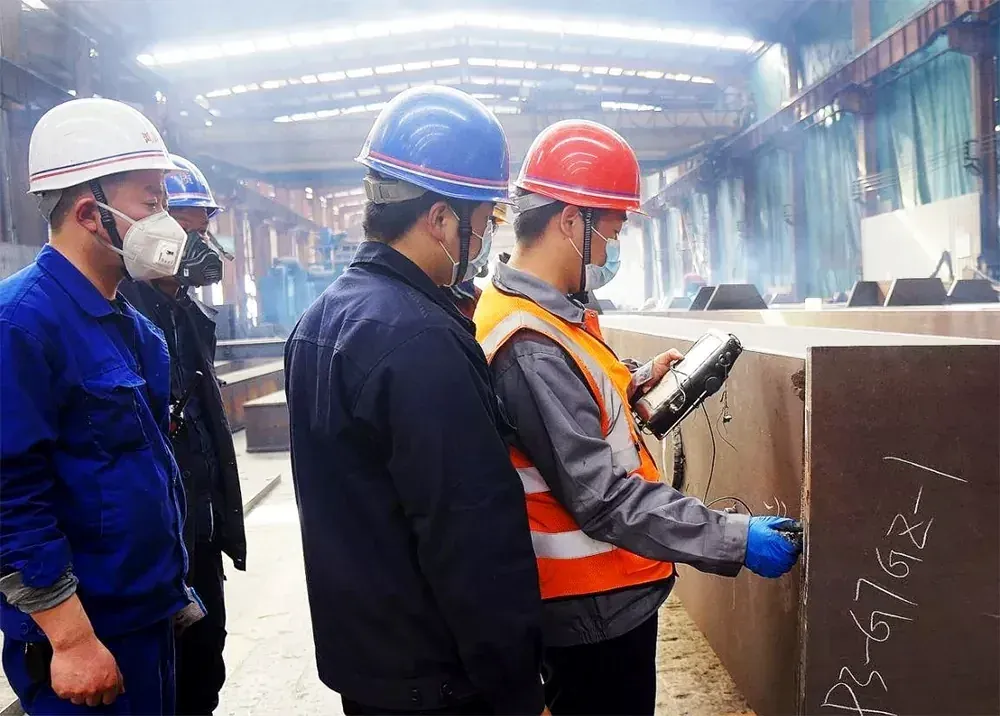
Our parent company, Honglu Steel Construction Group, listed on the Shenzhen Stock Exchange (002541) since 2011, runs 2,000+ of these robots every day.
Teachless welding software and robot control developed by our own team, with a process library built for structural steel.
Training uses your own parts, so operators learn on the work they will actually weld.
Pricing comes straight from the manufacturer, and you can operate the robots yourself at our factory before you order.
Every photo is from our own structural steel production.
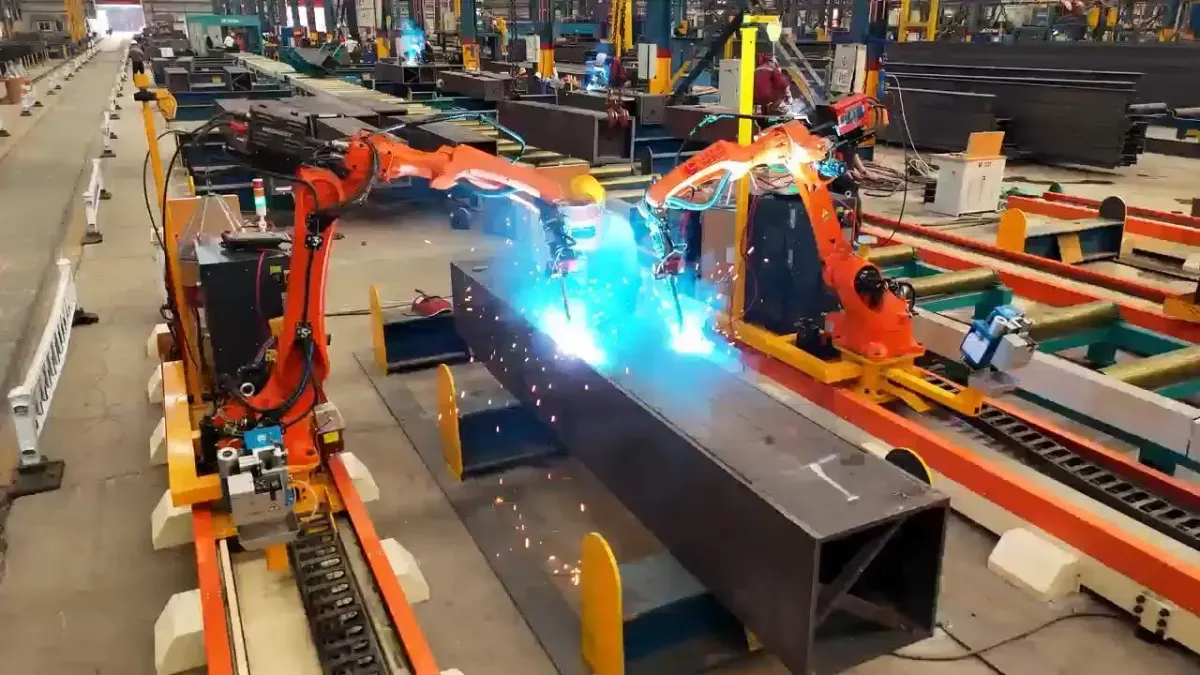
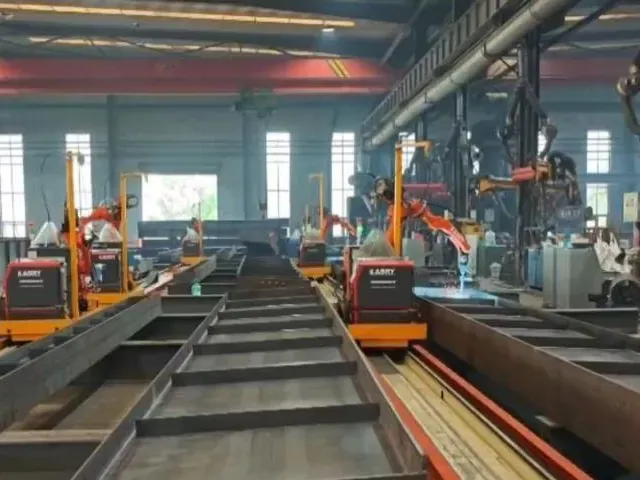
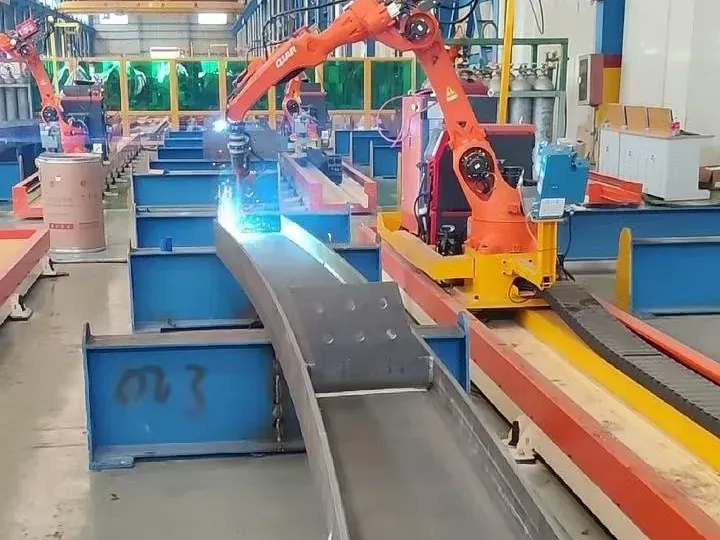
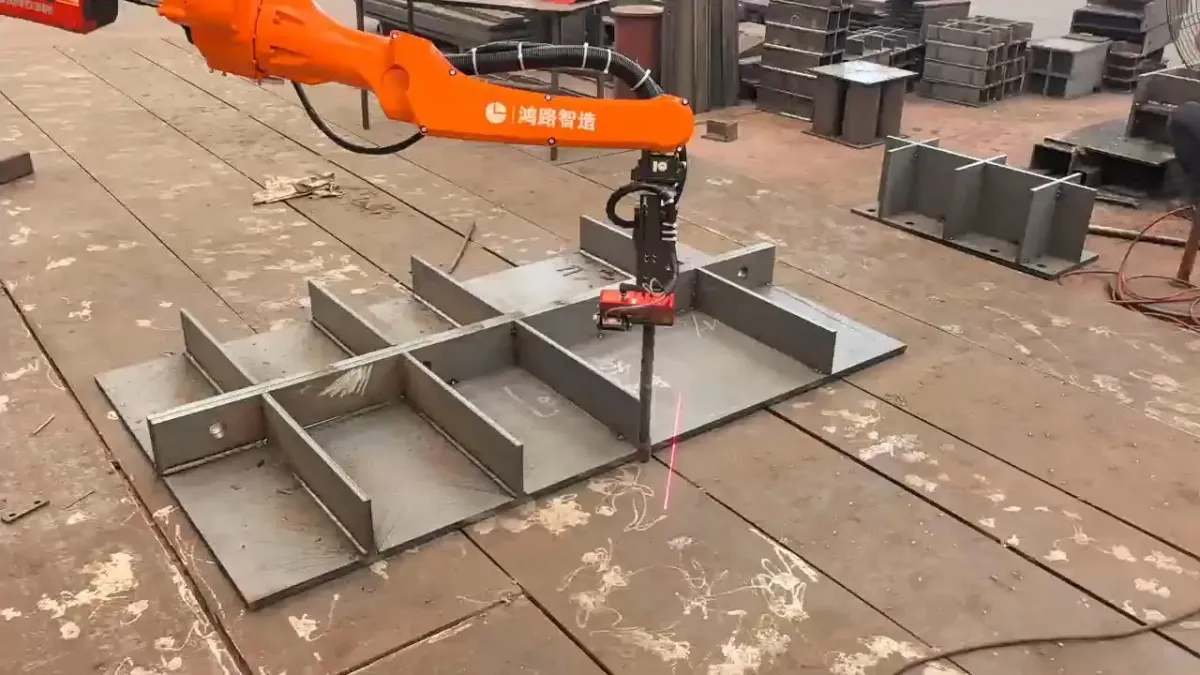
Beam & column weldingBridge steel weldingPEB steel buildings
Drawings, models or photos. We reply within one business day.
Our engineers check the joints, confirm whether the part suits robotic welding and recommend a layout and quotation.
Join a live video tour, or operate the robots yourself at our factory in Hefei.
Operators learn to run the station in 1–5 days. On-site commissioning and training at your workshop can be arranged; the cost is listed in your quotation.
Answers to what buyers ask most before sending an inquiry.
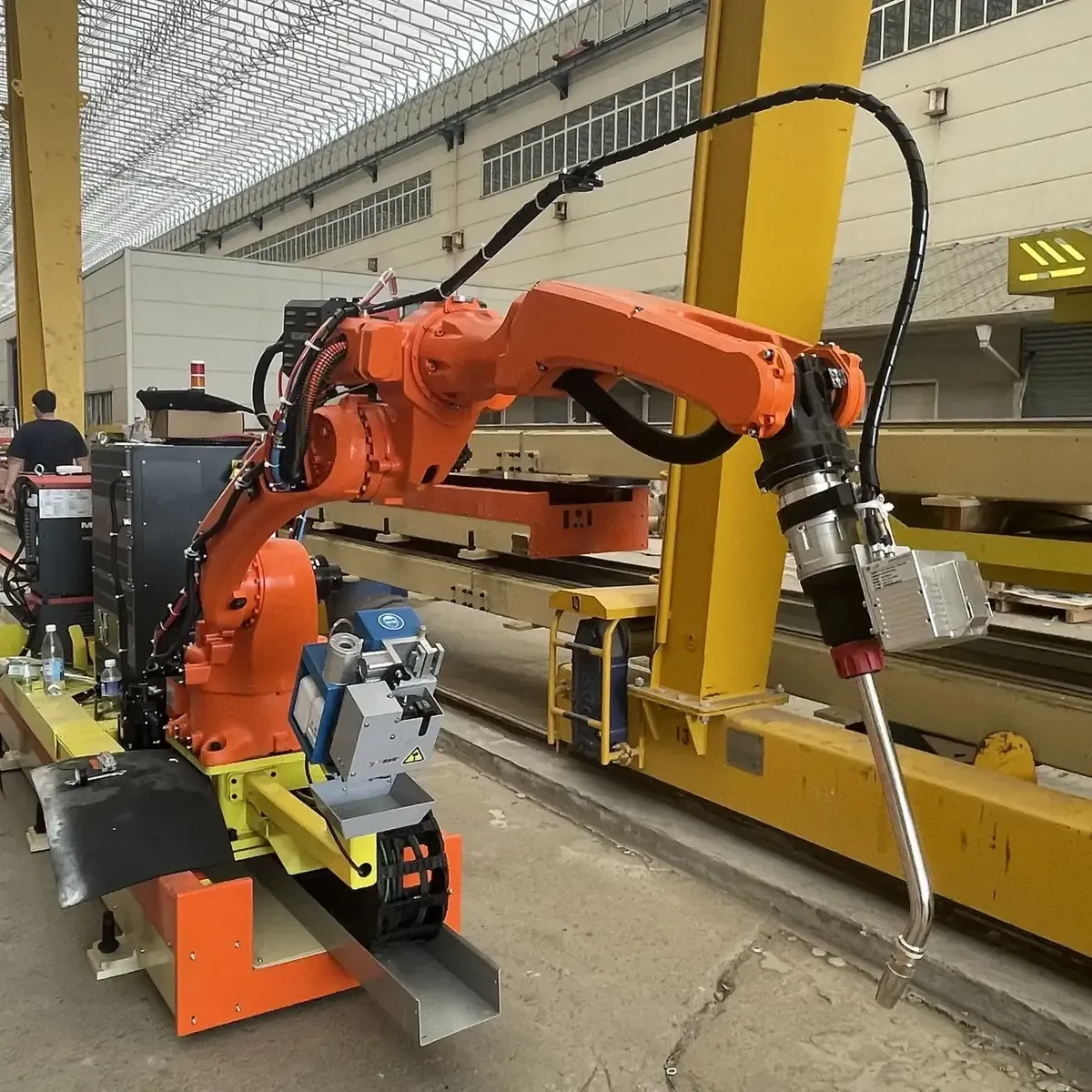
Typically 70–120 m per day shift, and up to 150 m on long flat seams. A high share of vertical welds or many short seams reduces output.
Operators learn to run the station in 1–5 days.
Yes. Book a live video tour on any video app, or visit our factory in Hefei or other plants of our group in China and operate a robot yourself. We pick you up at the airport or station.
Not to start: a description of the part and welds is enough for an inquiry. For welding, most parts use a STEP or IFC model, and flat stiffened plates can be scanned at the station.
The 7-axis rail-mounted robot suits beams and columns up to 1,500 mm wide; the 8-axis cantilever robot suits bridge units and wide plates up to 3,500 mm; the submerged arc station suits full-penetration seams on box columns.
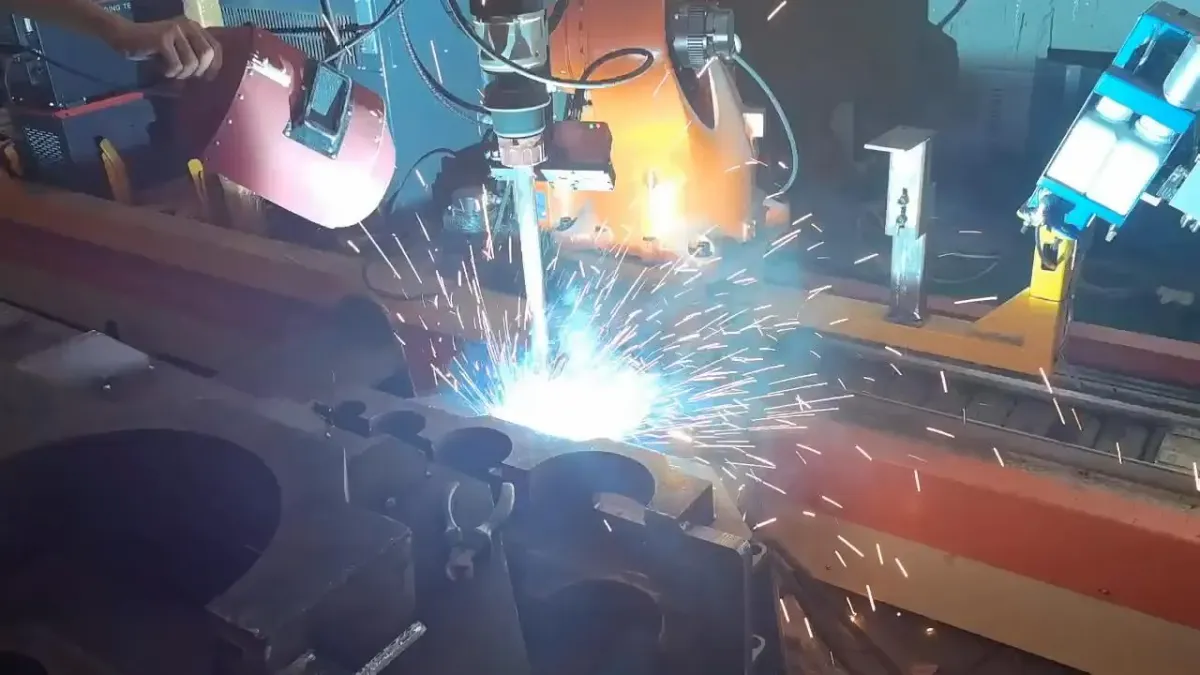
Send a drawing, model or photo of a typical part. Our engineers check whether it suits robotic welding, recommend a station layout and prepare a quotation — free of charge.
Factory-direct pricing. We reply within one business day.
Or email sales@steelweldingrobot.com